
Exploring how advanced materials, prefabrication, and biophilic design principles are reshaping the construction industry toward regenerative building practices.
The construction industry stands at a pivotal crossroads. For decades, we’ve measured success by the speed and cost of delivery — but the calculus is changing. As climate imperatives intensify and client expectations evolve, the most forward-thinking firms are redefining what it means to build well.
At TRIVIUS, we believe that sustainability is not a constraint on design — it is a catalyst for innovation. Every project we undertake now begins with a fundamental question: how can this building give back more than it takes?
The Shift from Net-Zero to Regenerative
Net-zero construction has become the baseline expectation for premium projects. But the next frontier — regenerative building — asks us to go further. Regenerative design seeks to create structures that actively improve their environment: cleaning air, generating energy, restoring ecosystems, and enhancing the wellbeing of their occupants.
“A building should not merely minimize harm — it should actively contribute to the health of its ecosystem and community.”
— Marcus Chen, Director of Sustainability
This isn’t aspirational thinking — it’s already happening. Mass timber structures sequester carbon for their entire lifespan. Living facades filter particulate matter from urban air. Rainwater harvesting systems replenish local aquifers. The technologies exist; the challenge is integration.
Materials as a Statement of Intent
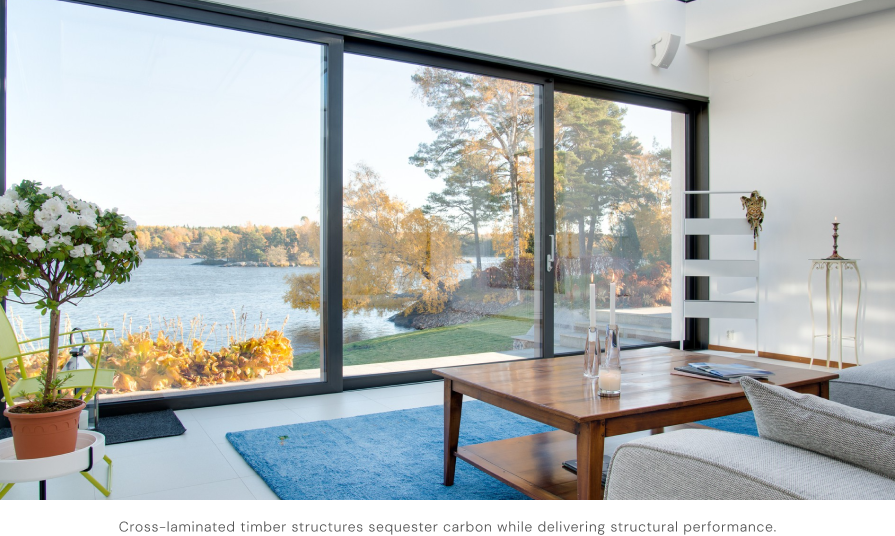
The materials we choose tell a story about our values. Cross-laminated timber (CLT) is not just an engineering solution — it’s a declaration that we believe in the intersection of performance and responsibility. Similarly, recycled steel, bio-based insulation, and low-carbon concrete formulations are becoming standard specifications in our projects.
- Cross-laminated timber reduces embodied carbon by up to 75% compared to traditional steel and concrete
- Bio-based insulation materials achieve comparable R-values while eliminating petrochemical dependencies
- Low-carbon concrete formulations using supplementary cementitious materials can reduce emissions by 40%
- Recycled and reclaimed materials add unique character while diverting waste from landfills
Prefabrication and the Precision Advantage
Factory-controlled fabrication environments allow us to achieve tolerances and quality levels that would be impossible on a traditional job site. Prefabricated wall panels, bathroom pods, and structural assemblies arrive on site ready for installation — reducing waste, accelerating schedules, and improving safety outcomes.
The result is not just a more sustainable process, but a better product. Tighter joints mean better air sealing. Precision-cut components mean less material waste. Controlled curing environments mean stronger, more durable assemblies.
Looking Forward
The buildings we construct today will stand for 50, 100, or even 200 years. Every decision we make — from material selection to mechanical system design — will ripple forward through decades of occupancy, maintenance, and eventual deconstruction. This long view demands that we build not just for today’s codes and standards, but for tomorrow’s expectations.
At TRIVIUS, we are committed to leading this transition. Every project is an opportunity to demonstrate that exceptional quality and environmental responsibility are not competing priorities — they are inseparable aspects of truly excellent construction.